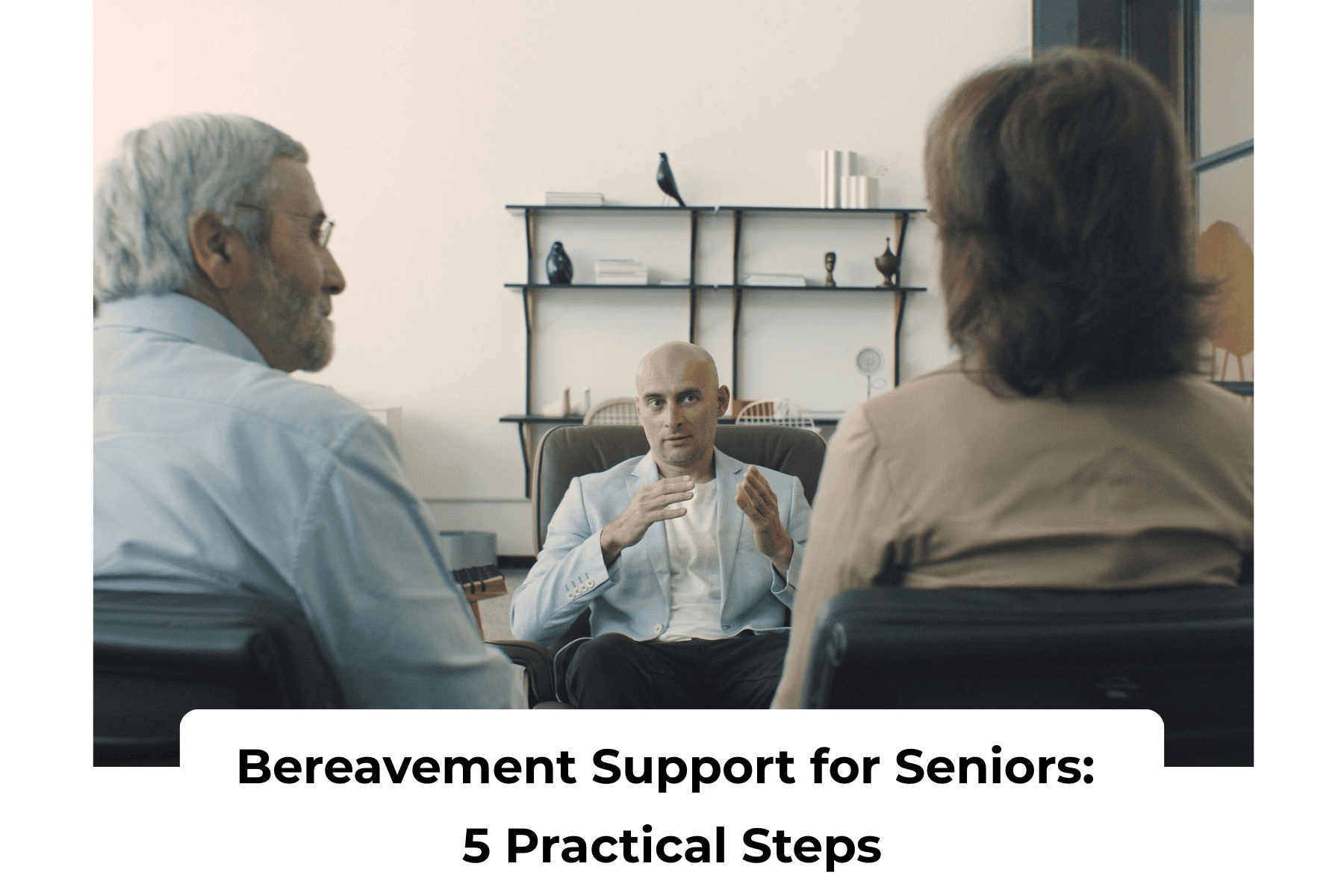
Bereavement Support for Seniors: 5 Practical Steps
Grief changes with age. If you or a loved one is an older adult, support can feel different than it did years ago. Bereavement Support for Seniors focuses on comfort, connection, and simple actions that bring relief day by day.
In this article 8 sections
Grief changes with age. If you or a loved one is an older adult, support can feel different than it did years ago. Bereavement Support for Seniors focuses on comfort, connection, and simple actions that bring relief day by day. You do not have to carry this alone. If you are ready to talk with someone who understands, Find a licensed therapist near you.
If you want a deeper overview of what bereavement care can look like (and why it helps), read Bereavement Support for Seniors: Healing and Hope.
If you’re still asking “why do I need support for this?”, start with Why Do Seniors Need Bereavement Support?
Understanding Bereavement Support for Seniors
Grief can come with many feelings at once-sadness, love, guilt, anger, or worry. Some seniors notice more restlessness or fear at night. It helps to name what is happening. Learning about common feelings like worry can make them less scary. To explore how worry can show up in the body and mind, read this guide on Breathing Meditation for Anxiety: A 2-Minute Calm-Down.
If nights feel especially hard, this may help too: Anxiety at Night: 7 Coping Skills in 5 Minutes.
Bereavement support is more than a shoulder to cry on. It is a safe space to share stories, honor memories, and build routines that fit your energy and health. Counselors adjust the pace, the length of sessions, and the tools to match your needs. Curious what a first visit looks like? Here is a clear overview of Does Online Therapy Work? (And Which Platform Works Best in 2026).
Support also respects culture, faith, and life experience. Many older adults find comfort in rituals, music, prayer, or community groups. Good bereavement care makes room for these, and helps you blend them with coping skills you can use at home.
How It Works
- Gentle check-in and story sharing: You set the pace. Start with what feels safe-how your days look now, what you miss most, and what brings even small moments of calm.
- Grief mapping and goals: Together you name your needs. This might include sleep support, easing lonely hours, staying active, or talking about anniversaries and holidays.
- Support circle planning: Identify people and places that help-family, friends, neighbors, faith groups, and community centers. Your therapist can help you ask for the kind of help you want.
- Skills for steadier days: Learn simple tools like calming breaths, Practical How-To Guide: Stress Management Counseling for Adults, memory rituals, and gentle movement. Practice during sessions and at home.
- Review and adjust: Grief shifts over time. You and your counselor check in, make changes, and celebrate steps forward, big or small.
Who It Helps & Benefits
Bereavement support helps seniors who have lost a spouse, sibling, close friend, or adult child. It also supports people who faced many losses at once or over many years. With steady care, many seniors sleep better, feel more connected, and notice more moments of peace.
If sleep is a major part of your grief right now, read Anxiety at Night: 5 Ways to Get You Back to Sleep.
Some older adults feel stuck, heavy, or numb. Others feel waves of sadness that come and go. Skills that lift mood and rebuild routines can help. A common approach teaches small, doable actions that bring structure and hope. To learn how this looks when low mood is present, explore Online Counseling Options for Depression Support.
Bereavement support also helps caregivers and adult children. Family members often want to help but are not sure how. Counseling can give everyone words to use, rituals to share, and a plan for hard dates like birthdays and holidays. If you’re supporting a grieving parent (and you’re hurting too), start here: Grief Counseling for Adult Children: Healing Steps.
If the loss was sudden and you feel stuck in shock, this guide can help: Coping With Sudden Loss: a Therapist’s How-To Guide.
Real-Life Example
Maria, age 78, lost her partner after 52 years together. Mornings felt empty. She skipped meals and stayed in bed late. Her daughter drove her to a grief counselor. In the first session, Maria talked about how quiet the house felt. The counselor asked about small parts of the day that still felt okay. Maria said she liked watering plants and listening to her favorite radio show.
Over the next weeks, Maria tried a simple morning routine. She made tea, opened the curtains, and watered the plants before the radio show started. She wrote one memory about her partner each day. Her counselor taught her slow breathing for bedtime. Maria still felt sad, but she also felt more steady. She learned that grief can change the brain and body, and that gentle practice can build new pathways for calm. Curious about this idea? Read about how therapy changes your brain.
Myths vs Facts
- Myth: “At my age, I should be over it by now.”
Fact: There is no deadline for grief. Your pace is valid. - Myth: “Talking will make it worse.”
Fact: Sharing safely often reduces distress and loneliness. - Myth: “If I need help, I am weak.”
Fact: Asking for support is a strong and caring choice.
Practical Tools You Can Try
- Two-minute breath reset: Inhale through your nose for four counts, hold for four, exhale for six. Repeat five times, especially before bed or during tough moments.
- Anchor your morning: Choose three small actions to start the day, such as open the blinds, drink water, and sit by a window for light. Consistency helps steady mood.
- Memory ritual: Pick a time each day to honor your loved one. Light a candle, play a favorite song, or write a short note to them in a journal.
- Lonely-hour plan: Identify the time you feel most alone. Schedule a phone call, short walk, or TV program you enjoy during that window.
- Gentle movement menu: Create a list of easy options-stretching in a chair, five-minute walk in the hallway, or simple balance exercises near a countertop.
When to Seek Professional Help
Reach out for professional support if daily tasks feel hard, sleep stays poor, or you feel cut off from others for more than a few weeks. If you worry about your safety or feel like you do not want to go on, seek help right away. Caring, skilled support is close by. Find a licensed therapist near you.
If cost is a concern, you still have options: Therapy Without Insurance: Low-Cost & Sliding-Scale Options.
Conclusion
Grief after a major loss is real, deep, and human. With Bereavement Support for Seniors, you can honor your love, ease your pain, and rebuild small moments of comfort. You deserve patient care that meets you where you are, one gentle step at a time. If you are ready to begin, find a therapist who understands grief and aging.
Keep reading
More in Notes

10 Proven Therapy Strategies to Boost Teen Confidence
Every teen deserves to feel capable, brave, and proud of who they are. If your child doubts themselves or avoids challenges, these 10 proven therapy strategies to boost teen confidence can help.

Confidence-Building Therapy Strategies for Teens
Watching your teen doubt themselves can be tough. School, friends, and social media can make confidence rise and fall each day. The good news is that confidence is a skill. It can grow with the right support.

Practical Counseling Techniques to Build Self-Esteem
If you are feeling stuck, small, or unsure of your worth, you are not alone. Many people struggle to see their strengths, even when others can.