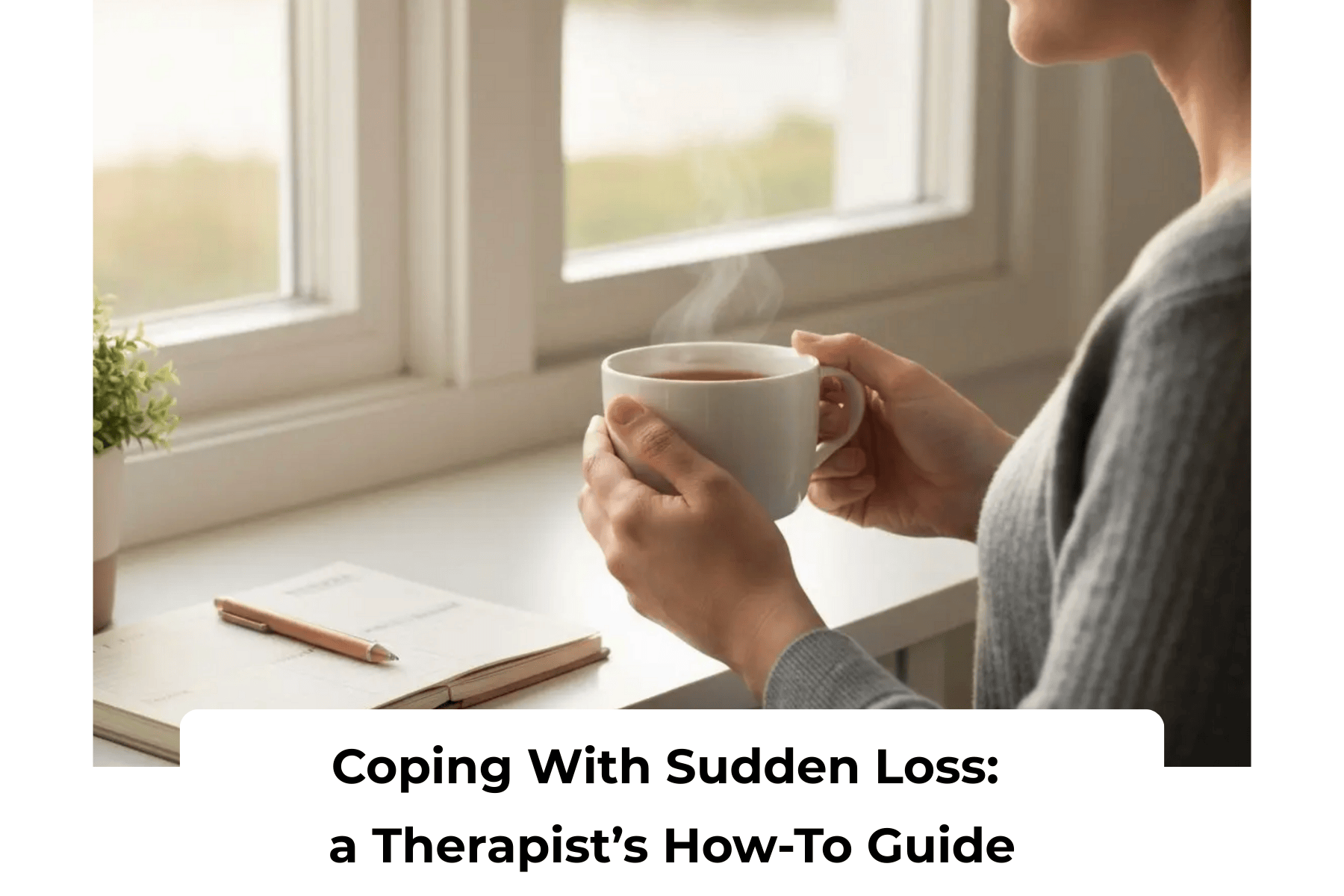
Coping With Sudden Loss: a Therapist’s How-To Guide
When a loved one dies or a life change hits without warning, the world can feel upside down. Coping with sudden loss is painful, confusing, and often lonely. You may feel numb one minute and overwhelmed the next.
In this article 8 sections
When a loved one dies or a life change hits without warning, the world can feel upside down. Coping with sudden loss is painful, confusing, and often lonely. You may feel numb one minute and overwhelmed the next. This guide offers simple, steady steps used in counseling to help you make it through each day. If you want support right away, you can take the first step now: Find a licensed therapist near you.
If you’re reading this in the first days after a loss, you might feel like time is distorted, your memory is patchy, or your body is “stuck on high alert.” That’s a common shock response. You’re not doing grief wrong.
If you want a shorter, quick-action version of this guide, start here: 5 Practical Tips for Navigating Sudden Loss Therapy.
If the person you lost was a parent or caregiver and you’re trying to hold everything together, this may feel especially relevant: Grief Counseling for Adult Children: Healing Steps.
Understanding Coping With Sudden Loss: a Therapist’s How-To Guide
Sudden loss shocks the body and mind. Your sleep, appetite, and focus may change. You might feel waves of sadness, fear, anger, or disbelief. Some people even feel guilty for laughing or for needing a break. These reactions are common parts of grief. They do not mean you are weak or doing it wrong. If fear or tension sits heavy in your chest, learning what anxiety feels like can help you name it and choose tools that fit.
Grief is not a straight line. It comes in bursts. Your brain is working hard to make sense of what happened, and to protect you from overload. That is why numbness, denial, or forgetfulness can show up. Over time, healthy coping and therapy can help your brain create safer pathways for memories, comfort, and calm. To learn more about this healing process, explore how therapy changes your brain in ways that support recovery.
If nights are the hardest part right now, you don’t have to reinvent a bedtime plan from scratch. Start with one small step from Anxiety at Night: 5 Ways to Get You Back to Sleep.
You also carry your own story, culture, and beliefs. These shape how you grieve and how you honor the person or situation you lost. There is no single right way to mourn. In counseling, we respect your traditions and values. We build a plan that fits what matters to you, at your pace.
How It Works
- First step: Stabilize. We start by helping your body feel safer. You practice slow breathing, grounding, and simple routines. Small wins matter.
- Tell the story in your own way. You can speak, write, draw, or sit in silence. You choose what to share and when. We focus on permission, not pressure.
- Name your needs. Together, we look at sleep, meals, movement, and support. We create a short daily plan that you can actually do.
- Care for tough thoughts. We notice thoughts that hurt or block healing, like “It’s my fault.” We gently test those thoughts and replace them with more balanced ones.
- Honor the bond. We explore ways to remember or connect, like a small ritual, letter, or playlist. This can reduce panic and increase comfort.
- Build coping skills. You practice tools for strong feelings, triggers, and anniversaries. You learn what to do when a hard moment hits.
- Look ahead. When you are ready, we set simple goals for work, home, and relationships so life can feel steady again.
If your brain feels scattered right now, structure can be calming. This guide can help you build a simple “today plan” without overwhelm: Practical How-To Guide: Stress Management Counseling for Adults.
Who It Helps & Benefits
Sudden loss therapy helps adults, teens, and families after a death, accident, breakup, job loss, or other life shocks. If you are unsure what happens in sessions, this guide on how therapy sessions work can ease first-visit nerves and set clear expectations.
Therapy offers a safe, steady place to feel your feelings and to regain your footing. Benefits can include better sleep, more energy, calmer moods, and stronger communication with the people you love. Over time, you can discover meaning, honor your bond, and live fully while still remembering. Many people also notice the long-term benefits of therapy, like resilience and confidence during future stress.
Families often need support after sudden loss. Children and adults grieve differently, and that is okay. Counseling gives each person a voice and a set of tools. It helps families talk about the loss in simple, caring ways, and it reduces unhelpful blame or silence.
If you want a steady step-by-step grief roadmap (especially for adult children), you can also read Healing After Loss: A How-To Guide for Adult Children.
Real-Life Example
Alex, a 38-year-old parent, lost a sibling in a sudden accident. At first, Alex felt numb and could not sleep. Then the waves hit-anger, fear, and guilt for not calling more often. In therapy, we started with stabilizing routines: breathing before bed, short walks at lunch, and asking a friend to check in twice a week. We practiced a grounding exercise for nightmares and made a memory box with photos and letters. Alex also worked on tough thoughts, and learned to replace “It’s my fault” with “I loved them, and I did my best with what I knew.” These shifts eased the heavy pressure.
Later, we added a tool for low mood and motivation. Alex explored a few steps from CBT for depression, like scheduling one meaningful activity per day. Over time, sleep improved, panic moments got shorter, and guilt softened into love and gratitude. The grief did not vanish, but life felt more livable, and memories became a source of comfort.
Myths vs Facts
- Myth: “I should be over this by now.”
Fact: Grief has no set timeline. Healing is not a race. - Myth: “If I cry, I’ll fall apart.”
Fact: Tears release stress and can bring relief. You can learn to ride the wave safely. - Myth: “Therapy means forgetting.”
Fact: Therapy helps you remember with less pain and more peace.
Practical Tools You Can Try
- 3-3-3 Grounding. Name three things you see, hear, and feel. Then take three slow breaths. This anchors you when a wave hits.
- Comfort Kit. Pack a note from a loved one, a calming scent, a soft item, and a soothing playlist. Keep it nearby for hard moments.
- Worry Window. Set a 10-minute daily time to write worries. When worries show up at other times, remind yourself, “I’ll meet you at the window.”
- Memory Ritual. Light a candle, play a favorite song, or write a thank-you note to the person you lost. Small rituals can calm the nervous system.
- Micro-Goals. Pick tiny steps: drink water, step outside, or text a friend. Check them off. Small steps rebuild trust in yourself.
If you need a quick reset right now (especially for panic spikes), try Breathing Meditation for Anxiety: A 2-Minute Calm-Down.
When to Seek Professional Help
Reach out for counseling if daily life feels stuck, if sleep and appetite are suffering, or if guilt and fear feel loud most days. You do not need to be “ready.” You only need to be willing to try one small step. A caring therapist can help you build safety, process the story at your pace, and find tools that work for you. If you are ready to talk with someone who understands grief, connect with a therapist in your area.
If cost is your biggest barrier, start here: Therapy Without Insurance: Low-Cost & Sliding-Scale Options.
Conclusion
Coping with sudden loss is not about moving on. It is about moving forward, with your love and memories held close. With the right support and tools, the pain can soften, and steadier days can return. You do not have to do this alone. Take the next gentle step today: find a licensed therapist who can help you heal.
Keep reading
More in Notes

10 Proven Therapy Strategies to Boost Teen Confidence
Every teen deserves to feel capable, brave, and proud of who they are. If your child doubts themselves or avoids challenges, these 10 proven therapy strategies to boost teen confidence can help.

Confidence-Building Therapy Strategies for Teens
Watching your teen doubt themselves can be tough. School, friends, and social media can make confidence rise and fall each day. The good news is that confidence is a skill. It can grow with the right support.
Practical Counseling Techniques to Build Self-Esteem
If you are feeling stuck, small, or unsure of your worth, you are not alone. Many people struggle to see their strengths, even when others can.