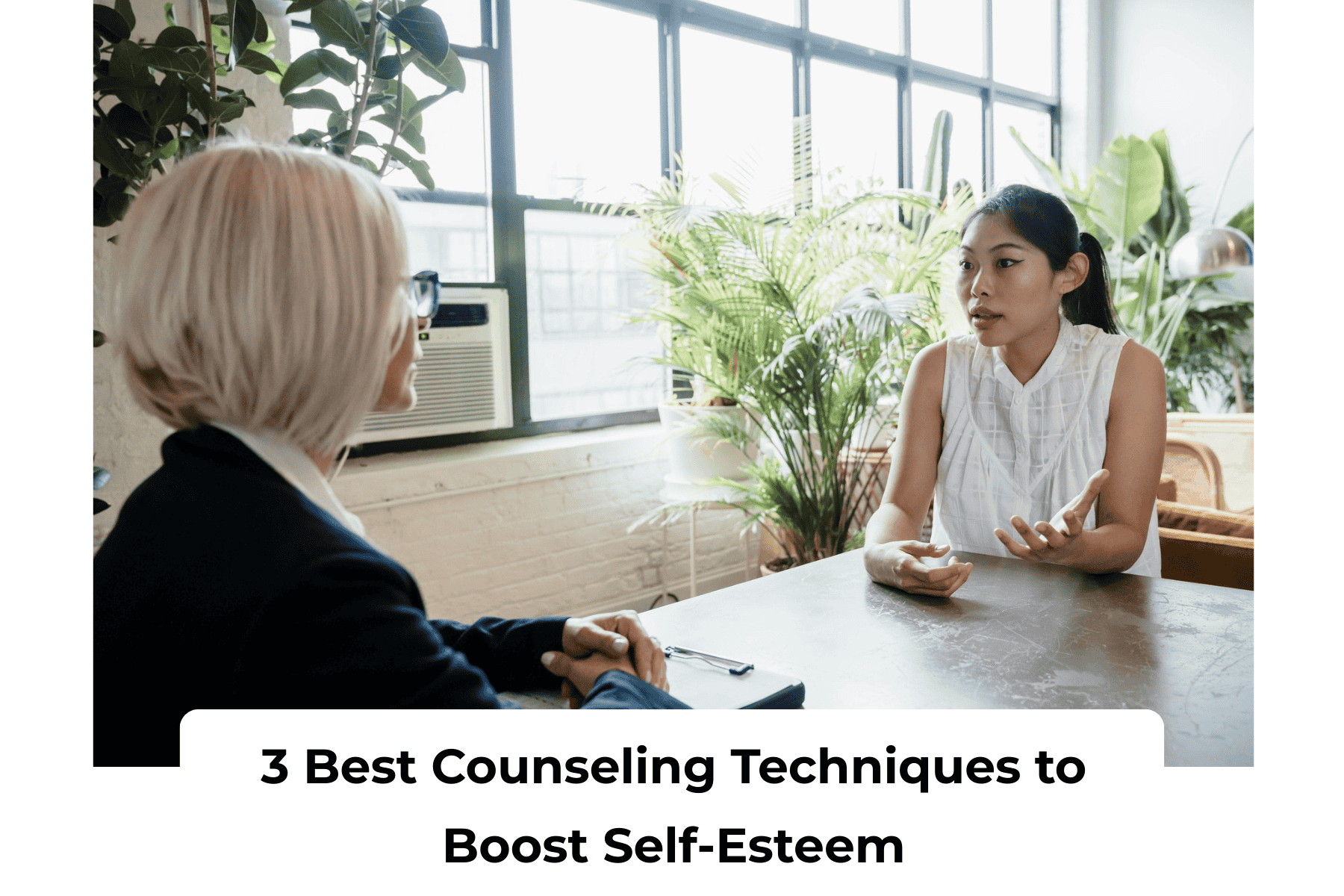
3 Best Counseling Techniques to Boost Self-Esteem
Feeling unsure about yourself can touch every part of life. Work, love, parenting, and friendships all feel harder when your inner voice is harsh. The good news is that confidence can grow.
In this article 8 sections
Feeling unsure about yourself can touch every part of life. Work, love, parenting, and friendships all feel harder when your inner voice is harsh. The good news is that confidence can grow. In this guide, we will explore the 3 best counseling techniques to boost self-esteem and how you can start today. If you are ready to take a step now, Find a licensed therapist near you.
Small note that helps readers who hesitate because of cost: low-cost therapy.
Understanding 3 Best Counseling Techniques to Boost Self-Esteem
Self-esteem is how you see and value yourself. It shifts over time. Life events, past criticism, and daily stress can lower it. Counseling helps you notice unhelpful patterns and build new ones. It is a safe space to practice kinder self-talk and stronger skills. Many people are surprised to learn that therapy can literally change old mind habits by changing brain pathways. To learn more about this, read about online therapy.
Low self-esteem often comes with negative thinking. You might think, “I always mess up,” or “I’m not enough.” One proven approach is Cognitive Behavioral Therapy (CBT). CBT teaches you to spot these thought traps and test them against facts. That way, you can build a more balanced view of yourself. Many people use CBT when they feel stuck or down. You can explore how it helps mood and confidence in depression support.
Self-esteem also connects with emotions like fear or worry. When anxiety rises, your inner critic gets louder. You may avoid risks or pull back from people. Counseling helps you notice what triggers that worry and learn ways to calm it. When you feel steady, it is easier to take healthy risks and grow. For more insight, see breathing meditation.
How It Works
- Self-esteem also connects with emotions like fear or worry. When anxiety rises, your inner critic gets louder. You may avoid risks or pull back from people. Counseling helps you notice what triggers that worry and learn ways to calm it. When you feel steady, it is easier to take healthy risks and grow. For more insight, see breathing meditation.
- Self-Compassion Training: Many people believe being hard on themselves will push them to do better. Research shows the opposite. Harshness leads to shame and avoidance. In counseling, you practice a kinder inner voice. You learn to speak to yourself the way you would to a good friend. Simple exercises, like placing a hand on your heart and saying a caring phrase, help soothe your nervous system. Then you are free to try, learn, and grow without fear. Over time, this builds sturdy confidence from the inside out.
- Strengths-Based and Values Work: Confidence grows when you act in line with what matters to you. Your counselor helps you list your strengths and core values. You set small, doable goals that match those values. You might plan a weekly step, like sharing an idea at work or going to a class. As you act, you collect real proof that you can handle things. Each step is a vote for your new identity: capable, worthy, and growing. This creates a positive loop-action builds confidence, and confidence makes action easier.
Who It Helps & Benefits
These techniques help adults who feel stuck in self-criticism or fear of failure. If you delay goals, hide your ideas, or struggle to accept praise, you are not alone. In counseling, you will learn skills, set small goals, and try them between sessions. If you are curious about what to expect in a first visit, this overview of stress management counseling can help.
They also support college students, young adults, and parents. Life transitions bring new roles, which can shake confidence. Balancing school, work, or parenting can make you doubt yourself. Counseling gives you tools to plan, cope, and celebrate progress. As you build small wins, your inner voice becomes more fair and calm. Many people notice lasting gains, which you can read about in stabilizing mood.
These techniques are also helpful for people with stress, perfectionism, or social anxiety. You learn to handle tough moments without judging yourself. You practice skills that fit your real life. Over time, you trust your ability to face new things. That trust is the heart of healthy self-esteem.
Real-Life Example
Maya is 34 and good at her job, but she avoids speaking up in meetings. She thinks, “Someone else will say it better,” and then feels regret. In counseling, she learns about “all or nothing” thinking. Her counselor asks her to write down the last meeting she stayed quiet. Maya lists her automatic thought, the feelings in her body, and the facts for and against the thought. She sees that her idea had value and that others had also paused before speaking. She practices a balanced thought: “My idea is useful, and I can share it clearly.”
Next, Maya and her counselor do self-compassion work. Before a meeting, Maya puts a hand on her heart and says, “It’s okay to feel nervous. I can share one point.” They also plan values-based steps. Her value is growth, so she aims to speak once per meeting. That week, she shares a point. People nod and build on it. Her confidence rises a little. She keeps practicing. A month later, she speaks more often and starts a small project. Her inner voice is kinder. She feels proud of her effort, not just the outcome.
Myths vs Facts
- Myth: Confidence means never feeling afraid.
Fact: Confidence is acting with care even when fear shows up. - Myth: Only big wins count.
Fact: Many small steps build strong, lasting self-esteem. - Myth: Being hard on yourself makes you succeed.
Fact: Self-compassion leads to learning, resilience, and growth.
Practical Tools You Can Try
- Three-Column Thought Record: Draw three columns: Situation, Thought, Balanced Response. Fill it out after a tough moment. Keep it short and honest. Repeat a few times each week.
- Compassion Break: When you stumble, pause. Say, “This is hard. Struggle is human. May I be kind to myself.” Take a slow breath and place a hand on your heart or belly.
- Strengths and Values List: Write five strengths and three core values. Pick one small action this week that matches a value. Track how you felt before and after.
- Wins Journal: Each evening, list three things you did well, no matter how small. This trains your brain to see effort and progress, not just flaws.
When to Seek Professional Help
If self-criticism or shame is stopping you from living your life, support can help. If you avoid goals, withdraw from people, or feel stuck with harsh self-talk, consider counseling. A therapist can tailor tools to your needs and pace. You do not have to do this alone. If you want support now, Talk with a therapist today.
Conclusion
Healthy self-esteem is not a fixed trait. It grows when you practice new thoughts, kinder self-talk, and small actions that match your values. The 3 best counseling techniques-CBT thought work, self-compassion training, and strengths-and-values action-can help you feel steady and capable. You deserve a voice that supports your life. If you are ready to begin, Find your therapist on QuickCounseling.
Keep reading
More in Notes

10 Proven Therapy Strategies to Boost Teen Confidence
Every teen deserves to feel capable, brave, and proud of who they are. If your child doubts themselves or avoids challenges, these 10 proven therapy strategies to boost teen confidence can help.

Confidence-Building Therapy Strategies for Teens
Watching your teen doubt themselves can be tough. School, friends, and social media can make confidence rise and fall each day. The good news is that confidence is a skill. It can grow with the right support.
Practical Counseling Techniques to Build Self-Esteem
If you are feeling stuck, small, or unsure of your worth, you are not alone. Many people struggle to see their strengths, even when others can.