Why Parents Need Specialized Support for Anxious Teens?
If your teen seems on edge, avoids friends, or worries all the time, you are not alone. Parenting support for anxious teens can make home feel safer and calmer for everyone.

In this article 8 sections
If your teen seems on edge, avoids friends, or worries all the time, you are not alone. Parenting support for anxious teens can make home feel safer and calmer for everyone. This kind of help gives you a clear plan, real-life tools, and a caring guide so you are not guessing. If you are ready to get help now, Find a licensed therapist near you.
Understanding Why Parents Need Specialized Support for Anxious Teens
Anxiety shows up in many ways. Your teen might have stomachaches, trouble sleeping, or panic in social settings. Some teens hide it. Others lash out. Knowing what anxiety feels like in teens can ease confusion and lower blame at home.
Parents need specialized support because teen brains are still growing. Stress can feel bigger and harder to manage during these years. With the right tools, families learn to calm the body, reframe thoughts, and practice new habits. These skills work with development, not against it. You can also learn why steady practice matters by reading about how therapy changes your brain.
Family support is not about “fixing” your teen. It is about changing the dance at home. When parents get coaching, you learn how to respond to fear in a calm, firm, and kind way. Your teen feels safer. You feel less stuck. The whole family can breathe again.
How It Works
- Warm intake: You share your goals, your teen’s strengths, and your worries. The therapist explains the process and sets a caring tone.
- Teen-friendly assessment: The clinician meets with your teen in a simple, respectful way. They learn what triggers anxiety and what helps.
- Parent-only session: You get space to ask hard questions. You also learn what to expect and how you will be supported.
- Shared plan: Everyone agrees on clear, small goals. Examples: attend one class, sleep in own bed, or try one social event.
- Skills training: Your teen learns body-calming tools, thought-balancing skills, and step-by-step exposure practice to face fears safely.
- Parent coaching: You learn validation, limit-setting, and how to lower “accommodations” that feed anxiety, while keeping trust strong.
- Home practice: Short, daily exercises fit your family’s routine. Wins are tracked. Barriers are reviewed without blame.
- Check-ins and adjustments: Sessions pivot based on what works. The plan stays flexible and realistic.
- School and community teamwork: With consent, your therapist can coordinate with teachers, coaches, or doctors as needed.
- Graduation and aftercare: You review progress, set a relapse-prevention plan, and know what to do if stress rises again.
Who It Helps & Benefits
This support helps families facing school refusal, social anxiety, panic, test stress, or general worry. It also helps when anxiety looks like anger or shutdown. Structure brings safety. Coaching brings hope. If you want to see what meetings are like, learn more about how therapy sessions work.
Parents benefit too. You get a roadmap and a steady partner. You learn to set kind boundaries and replace power struggles with teamwork. Many teens also have low mood along with worry. Skills from CBT for depression can help teens challenge negative thoughts and build healthy routines, which also supports anxiety recovery.
Families often notice better sleep, fewer fights, and more confidence. Teens learn to face fears in small steps. Parents learn to coach, not rescue. These changes can last. Read about the long-term benefits of therapy to see how early support can protect your teen’s future.
Real-Life Example
Let’s meet Maya, age 15. She used to love art class. After a rough group project, she began dreading school. Mornings grew tense. Stomachaches were common. Her parents, worried and kind, let her stay home “just today.” Soon, “just today” became many days. Everyone felt stuck. In therapy, Maya learned to notice body cues and use quick breathing tools.
With her therapist, she built an exposure ladder: first log in to class, then attend homeroom, then stay for first period. Her parents learned to validate her fear and reduce rescue behaviors. They praised effort, not perfection. Mornings became calmer. After a few months, Maya was back to art class twice a week. Progress was not a straight line, but the family had a plan. They knew how to adjust and keep going.
Myths vs Facts
- Myth: “Talking about anxiety makes it worse.”
Fact: Naming fear lowers its power and opens the door to coping. - Myth: “Teens should just toughen up.”
Fact: Anxiety is not a choice. Skills and support help the brain and body settle. - Myth: “Good parents should know what to do.”
Fact: No one is born knowing this. Coaching gives you tools that work.
Practical Tools You Can Try
- Grounding breath: Try “4-4-6 breathing.” Inhale through the nose for 4, hold for 4, exhale through the mouth for 6. Repeat 5 times. Longer exhales calm the body.
- Validation first: Start with “I get that this is scary.” Then add, “Let’s face one small step together.” Validation soothes. A small step builds courage.
- Worry window: Set “worry time” for 10 minutes in the afternoon. When worry pops up at other times, write it down and save it for the window. This teaches your brain that worries do not run the day.
- Exposure ladder: Pick a fear and list steps from easiest to hardest. Practice the first step until it feels easier, then move to the next. Celebrate effort, not outcome.
- Parent pause: When your teen is anxious, pause for 5 seconds before replying. Breathe. Keep your voice slow and steady. Calm is contagious.
When to Seek Professional Help
Reach out for extra help if anxiety keeps your teen from school, sleep, friends, or daily life, or if home routines feel like a constant battle. You do not have to wait for a crisis. Early help can make change faster and easier. If you are ready to take the next step, connect with a licensed therapist.
Conclusion
Specialized support gives parents a map, a calm guide, and tools that fit real life. Your teen can learn to face fear. Your family can share more peace and connection. You are not alone, and help is close. Find a therapist today and take the first step toward a calmer home.
Keep reading
More in Family conflicts

Why Choose Therapy for Shared Parenting Success?
Parenting after a breakup or during big changes can feel heavy. Schedules shift. Feelings run high. Little things turn into big fights. Therapy for shared parenting success gives you a steady, neutral space to work together.
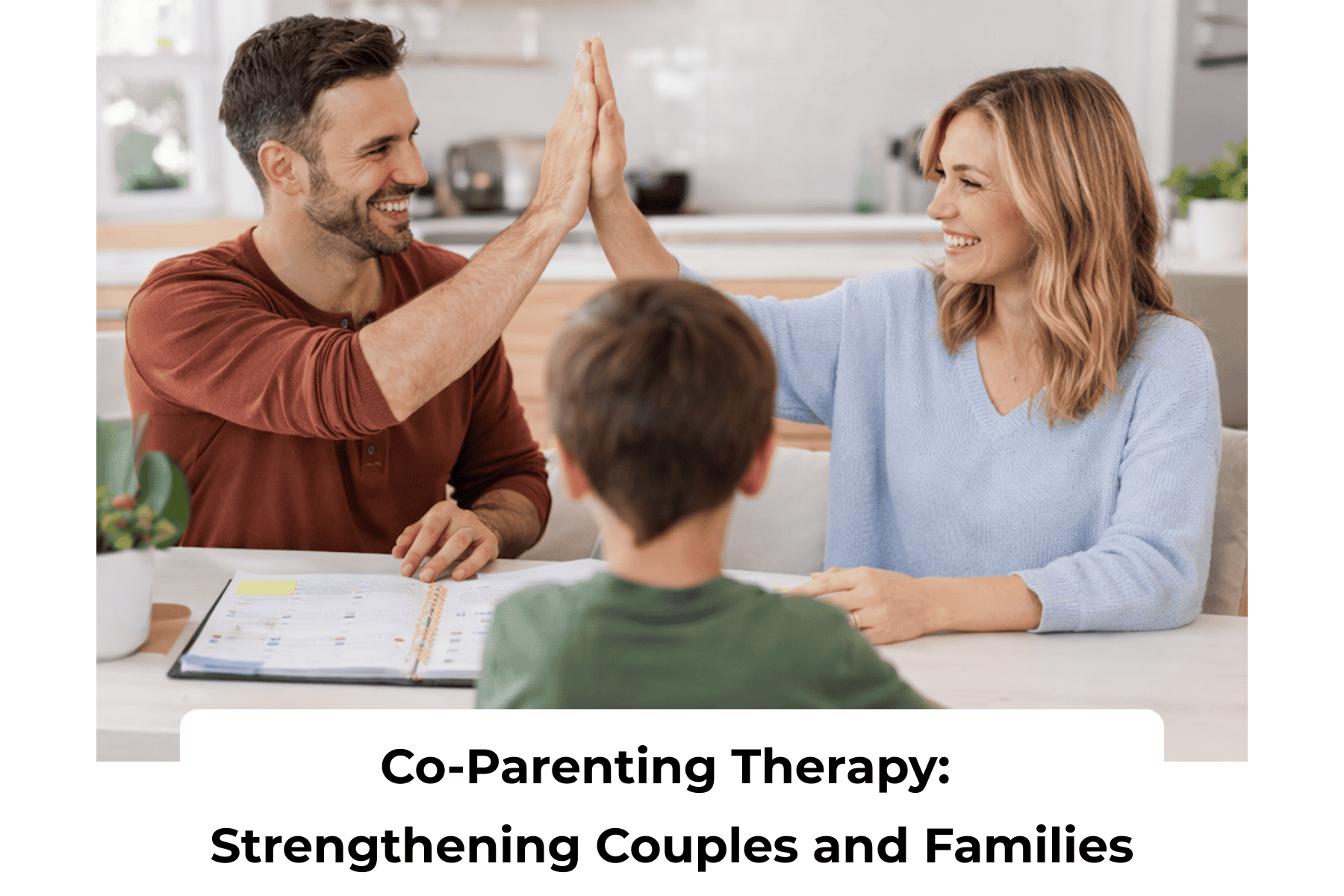
Co-Parenting Therapy: Strengthening Couples and Families
Co-Parenting Therapy can help you and your co-parent work as a team, lower stress, and support your child’s well-being. If arguments about schedules, homework, or house rules keep popping up, you are not alone.

What Is Co-Parenting Therapy for Couples and Families?
Co-parenting therapy for couples and families helps parents work together for their children’s well-being, even when they disagree or live apart.